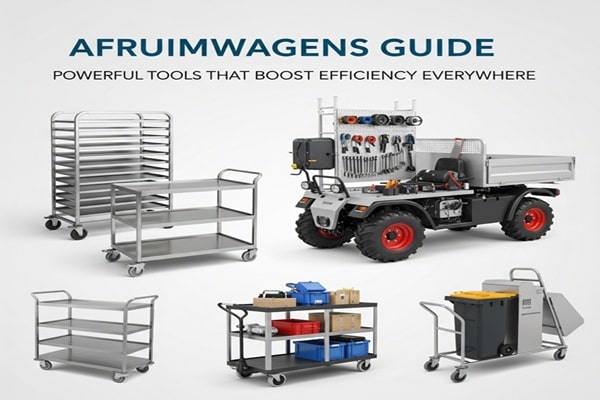
If you’ve ever seen carts quietly rolling around farms, hotels, or warehouses, you’ve likely encountered an afruimwagen. Derived from Dutch, meaning “clearing cart,” these simple yet highly versatile vehicles are much more than moving tools—they are productivity and efficiency champions. From agriculture to hospitality and urban sanitation, afruimwagens streamline work, reduce effort, and even carry cultural significance. Let’s explore why these carts are quietly indispensable across industries.
What Are Afruimwagens?
At their core, afruimwagens are utility carts or trolleys designed to transport, collect, and manage materials efficiently. Their applications are broad:
-
Moving harvested crops across farms
-
Clearing dishes in restaurants or hotels
-
Transporting tools and raw materials in factories
-
Handling waste collection in cities
Their role is simple: make transportation easier, safer, and faster while keeping spaces organized. Over time, they’ve become key tools behind the scenes in almost every sector.
The Historical Evolution of Afruimwagens
Afruimwagens trace back to medieval Europe, especially the Low Countries (modern Netherlands and Belgium). Early versions were wooden carts, pulled by horses or oxen, used to carry hay, straw, and crop residues.
-
18th century: Expanded to ports, markets, and construction zones, often with larger wheels and side panels.
-
Industrial Revolution: Steel frames, pneumatic tires, and hydraulic systems turned carts into mechanized tools.
-
Post-WWII: Brake systems, motorized coupling, and higher load capacities became standard.
Beyond function, afruimwagens gained symbolic roles in Dutch traditions—appearing in parades and weddings as festive, ceremonial wagons. Today, they merge utility and culture seamlessly.
Types of Afruimwagens and Their Uses
1. Agricultural Afruimwagens
Farmers rely on large, often tractor-towed wagons for:
-
Harvested crops
-
Fertilizers or feed
-
Field debris
Hydraulic tipping beds and rugged wheels make unloading easy and work faster, reducing labor and minimizing loss. They’re essential for modern precision farming.
2. Industrial Afruimwagens
In factories and warehouses, industrial models help move:
-
Raw materials
-
Tools
-
Semi-finished products
Features like steel frames, locking wheels, and ergonomic handles improve safety and efficiency. These carts keep assembly lines smooth and inventory flowing without constant manual lifting.
3. Hospitality and Food Service Afruimwagens
Restaurants, hotels, and buffets use lightweight, multi-tier trolleys to:
-
Clear tables
-
Collect dishes
-
Deliver clean tableware
Stainless steel or durable plastic ensures easy cleaning and quiet operation. Some models include built-in bins, tray slots, and noise-reduction wheels—perfect for high-traffic or upscale venues.
4. Municipal and Waste Collection Afruimwagens
City sanitation departments deploy larger carts for:
-
Garbage, recycling, and compost collection
-
Organized waste separation
Electric or hybrid options reduce emissions, and many have lift mechanisms for hands-free emptying. Integrated GPS or fleet management software optimizes routes, saving time and fuel.
5. Parade and Symbolic Afruimwagens
Decorated with flowers or ribbons, these wagons appear in:
-
Cultural parades
-
Seasonal festivals
-
Weddings and ceremonial events
They symbolize clearing away the old and welcoming the new, blending practicality with cultural storytelling.
Mechanical Design and Innovations
Modern afruimwagens have evolved far beyond wooden carts. Key design features include:
-
Materials: High-strength steel, aluminum, or impact-resistant plastics
-
Hydraulics: For easy tilting and unloading
-
Ergonomics: Padded handles, adjustable shelves, and safety brakes
-
Smart tech: GPS tracking, load sensors, AI-assisted routing
-
Eco-friendly options: Electric drives, solar panels, and reduced noise
These innovations make afruimwagens efficient, safe, and environmentally conscious.
Benefits Across Industries
Using afruimwagens brings multiple advantages:
-
Efficiency: Cuts time and manpower for transporting materials
-
Safety: Reduces strain and injury risks
-
Hygiene: Facilitates clean, organized movement of items in food and healthcare sectors
-
Cost-effective: Durable construction reduces maintenance and labor costs
-
Eco-friendly: Electric and hybrid models lower emissions and promote recycling
In short, afruimwagens are a scalable solution for modern operational challenges.
Sector-Wise Applications
-
Restaurants & Hotels: Clear tables, transport dishes, restock service stations
-
Hospitals & Nursing Homes: Move meals, linens, and medical tools hygienically
-
Farms & Cooperatives: Carry crops, silage, and field debris efficiently
-
Municipal Sanitation: Collect and separate waste in streets, parks, and public areas
-
Warehouses & Logistics Centers: Transport heavy tools, parts, or finished goods
-
Events & Festivals: Assist with setup, tear-down, and ceremonial displays
Choosing the Right Afruimwagen
Key considerations for selecting the ideal cart include:
-
Primary Use: Agriculture, hospitality, construction, or sanitation
-
Load Capacity & Size: Match your materials and space
-
Material: Stainless steel for durability, plastic for lightweight mobility
-
Features: Hydraulic lifts, modular bins, locking wheels
-
Sustainability: Electric or hybrid options for greener operations
Choosing carefully ensures safety, efficiency, and long-term value.
Also Read : Quotela Net: Inspiring Quote Platform That Boosts Your Daily Mindset
Maintenance and Safety Tips
Keep your afruimwagens performing at their best with these practices:
-
Clean daily, especially in food or medical settings
-
Inspect wheels, axles, and hydraulic systems regularly
-
Lubricate moving parts for smooth operation
-
Adhere to weight limits to avoid accidents
-
Train staff on safe handling, especially in tight spaces
-
Maintain a usage log for preventive maintenance
Proper care extends lifespan and ensures consistent reliability.
Real-Life Case Studies
Agriculture – Dutch Potato Farm
Hydraulic afruimwagens reduced the harvest cycle by 20%, saving fuel and manual labor.
Hospitality – 5-Star Hotel Buffet
Stainless steel carts allowed staff to clear tables 30% faster, improving guest satisfaction.
Urban Waste Management – Ghent, Belgium
Electric carts cut CO₂ emissions by 15% while reducing noise in residential areas.
These examples show how afruimwagens drive measurable improvements across different industries.
Environmental Impact
Modern afruimwagens support sustainability by:
-
Reducing emissions with electric or solar-powered models
-
Supporting organized waste collection and recycling
-
Optimizing loads to cut unnecessary trips
-
Using recyclable or biodegradable materials
Smart routing and AI integration help cities and companies lower their ecological footprint while improving operational efficiency.
Cultural Significance
In parts of the Netherlands and Belgium, afruimwagens are more than tools—they’re symbols:
-
New Year Parades: Represent clearing away the old year’s burdens
-
Weddings: Carry gifts or the couple, signifying a fresh start
-
Historical Festivals: Educate the public on pre-industrial lifestyles
These traditions highlight how a simple cart can carry deep cultural meaning.
Challenges and Limitations
Even with their advantages, afruimwagens have limitations:
-
High upfront cost for advanced electric or hydraulic models
-
Maneuvering large carts in tight indoor spaces can be tricky
-
Specialized parts may require trained maintenance
-
Size and weight restrictions may apply in certain areas
-
Many operators still underestimate their strategic value
With careful planning, these challenges are manageable, especially when weighing long-term benefits.
The Future of Afruimwagens
The next generation of afruimwagens will be:
-
Automated & AI-driven: Learning optimal routes and self-correcting in real time
-
Solar-powered: Reducing reliance on fossil fuels
-
Modular: Swap components for different tasks
-
Integrated into smart city logistics: Optimizing traffic flow and waste collection
The humble clearing cart is becoming a smart, green, and indispensable tool of tomorrow.
Conclusion
Afruimwagens have come a long way—from simple wooden carts to high-tech, multifunctional tools. They improve efficiency, hygiene, and workflow across industries while carrying cultural significance in certain regions. Choosing the right afruimwagen isn’t just practical—it’s a strategic decision that impacts productivity, sustainability, and resilience.
As industries adopt faster, greener, and smarter methods, afruimwagens will remain at the heart of operational excellence, quietly clearing the way for progress.
FAQs About Afruimwagens
1. What is an afruimwagen used for?
It’s used to collect, transport, and clear materials such as dishes, tools, crops, or waste, making work faster and safer.
2. Where are afruimwagens commonly used?
Restaurants, hotels, hospitals, warehouses, farms, construction sites, sanitation departments, and event venues.
3. What types are available?
Food service trolleys, agricultural wagons, industrial carts, waste collection units, and ceremonial or parade wagons.
4. How do I choose the right one?
Consider use, weight capacity, material, mobility, and features like hydraulic lifts or modular bins.
5. Are there eco-friendly options?
Yes—electric, solar-powered, and recyclable material models are increasingly common, supporting sustainability goals.