Speciering is one of those ideas that quietly connects many areas of science and strategy, even if most people only hear about it in biology class. At its core, speciering explains how differences emerge, grow, and eventually become something entirely new. Whether you are curious about how animals evolve, how chemicals behave, or even how brands speak to different audiences, speciering offers a clear lens to understand change.
Let’s break it all down in a friendly, easy way, without heavy jargon, and with plenty of real-world examples you can actually relate to.
What Is Speciering, Really?
Speciering simply describes the process of differentiation. In biology, it means the formation of new species over time. In chemistry, it refers to the different forms an element can take. In marketing, it becomes a smart way to shape products or messages for specific groups.
Different fields use the term differently, but the core idea stays the same:
speciering explains how variation leads to diversity.
Understanding What Makes a Species
Before talking about speciering, it helps to know what scientists mean by “species.” Surprisingly, there isn’t just one answer.
Key Ways Scientists Define a Species
-
Biological view: Groups that can interbreed and produce fertile offspring
-
Morphological view: Groups defined by physical traits like size or shape
-
Phylogenetic view: Groups connected by shared ancestry and genetics
-
Ecological view: Groups defined by their role in an ecosystem
Each definition works well in certain situations and poorly in others. Together, they show why speciering is not simple or rigid. Nature rarely follows clean rules.
How Speciering Begins in Evolution
Speciering does not happen overnight. It unfolds slowly, often across thousands or millions of years.
Here’s how it usually starts:
-
Small genetic changes appear through mutations
-
Some traits help survival more than others
-
Populations begin adapting to different conditions
-
Gene flow between groups slows or stops
Once populations stop sharing genes regularly, they start drifting apart. Over time, those differences pile up.
The Genetic Engine Behind Speciering
At the heart of speciering is genetics.
How Genes Drive Change
-
Mutations introduce new traits
-
Allele frequency shifts change how common traits become
-
Epigenetic changes affect how genes behave without altering DNA
-
Inherited variations pass differences to future generations
Small changes may seem insignificant at first. Given enough time, they completely reshape populations.
Natural Selection and Adaptation
Natural selection plays a starring role in speciering. Traits that improve survival and reproduction tend to stick around.
Classic Examples
-
Moths changing color to blend into polluted trees
-
Finches developing different beaks to match food sources
-
Bears adapting to Arctic climates with fur and fat changes
These shifts don’t aim for perfection. They simply favor what works best under specific conditions.
When Chance Takes Over: Genetic Drift
Not all speciering happens because traits are useful. Sometimes, randomness leads the way.
Two Important Random Forces
-
Bottleneck events: Disasters reduce populations suddenly
-
Founder effect: Small groups form new populations with limited genes
On islands or isolated habitats, these effects can accelerate speciering dramatically.
Reproductive Isolation: The Final Line
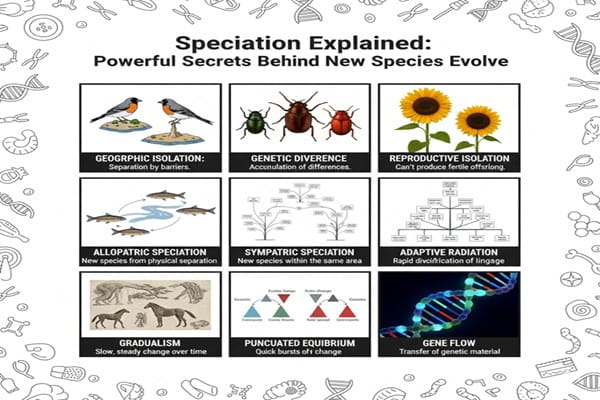
Speciering becomes official when populations can no longer reproduce successfully.
Types of Reproductive Barriers
-
Different breeding seasons
-
Different mating behaviors
-
Physical incompatibility
-
Sterile or nonviable offspring
Once this happens, even if populations meet again, they remain separate species.
Major Types of Speciering Explained Simply
Speciering takes different paths depending on conditions.
-
Allopatric: Physical separation like rivers or mountains
-
Sympatric: Same location, different behaviors or niches
-
Parapatric: Neighboring populations slowly diverge
-
Peripatric: Small offshoot groups evolve rapidly
-
Hybrid: New species form from successful hybrids
Each path highlights how flexible evolution can be.
Real-Life Examples That Make It Click
Speciering isn’t theoretical. Nature offers countless living examples.
Well-Known Cases
-
Darwin’s finches evolving specialized beaks
-
Cichlid fish diversifying in African lakes
-
Apple maggot flies shifting host plants
-
Polar bears diverging from brown bears
These stories show how environment, behavior, and genetics combine to drive diversity.
Speciering Through Deep Time
Fossils give a long-term view of speciering. They suggest two major patterns:
-
Gradual change over long periods
-
Sudden bursts of rapid diversification
Both patterns appear throughout Earth’s history, depending on conditions.
How Humans Influence Speciering
Humans have become powerful agents of change.
Human-Driven Forces
-
Urban environments creating new niches
-
Selective breeding shaping animals and crops
-
Pollution driving rapid adaptation
-
Genetic engineering altering traits directly
This influence brings innovation but also serious responsibility.
Speciering and Environmental Science
Environmental scientists use speciering to understand resilience and adaptation.
-
Fish evolving pollution tolerance
-
Plants adapting to climate shifts
-
Hybrid zones forming as habitats overlap
Protecting biodiversity requires understanding how speciering works under stress.
Chemical Speciering Explained Clearly
In chemistry, speciering means identifying the different forms of an element.
Why It Matters
-
Toxicity depends on chemical form
-
Environmental safety relies on accurate analysis
-
Medicine uses speciering to design safer drugs
Tools like chromatography and mass spectrometry help scientists track these differences precisely.
Also Read : Harlene Rosen: The Untold Story of Woody Allen’s First Wife
Speciering in Marketing and Communication
Speciering isn’t limited to science.
In marketing, it means creating offerings specifically designed for smaller, defined audiences.
Everyday Examples
-
Music platforms tailoring playlists
-
Travel sites highlighting niche stays
-
Brands customizing messages for micro-communities
Speciering here improves relevance, loyalty, and trust.
Ongoing Challenges and Debates
Speciering raises tough questions.
-
How should hybrids be classified
-
When does variation become a new species
-
Are some species being overclassified
These debates show how complex life truly is.
Where Speciering Research Is Headed
Modern tools are transforming how speciering is studied.
-
Genome sequencing tracks evolution in detail
-
Artificial intelligence predicts future divergence
-
Conservation genomics protects endangered species
-
Medical research applies speciering to bacteria and viruses
The future of speciering research blends biology, technology, and ethics.
Why Speciering Matters More Than You Think
Speciering explains biodiversity, ecosystem stability, and adaptation. It influences conservation, agriculture, medicine, and even business strategy.
Every living organism, including humans, exists because of countless speciering events over time. Recognizing this helps build respect for diversity and change.
Final Thoughts
Speciering is not just about new species appearing. It is about understanding how difference forms, survives, and thrives. From evolution to chemistry to marketing strategy, speciering shows that variation is not a flaw. It is the foundation of progress.
Once you see the pattern, you start noticing speciering everywhere.
FAQs About Speciering
What is speciering in biology?
It is the process where populations evolve into distinct species that can no longer reproduce with each other.
What causes speciering?
Mutations, natural selection, isolation, genetic drift, and environmental changes all play roles.
What are the main types of speciering?
Allopatric, sympatric, parapatric, peripatric, and hybrid speciering.
Why is speciering important?
It explains biodiversity, helps protect ecosystems, and predicts how life adapts to change.
Do humans affect speciering?
Yes. Human activities can accelerate, redirect, or disrupt natural speciering processes.