When driving through Norway’s forests or hiking in its wild landscapes, you might not think about the formal systems in place to manage wildlife. Yet, the viltnemnda—literally “wildlife committee”—plays a critical role in keeping both animals and humans safe. These municipal-level committees oversee hunting, respond to wildlife accidents, and advise on conservation, ensuring that Norway’s rich biodiversity coexists with local communities.
This guide takes a deep dive into what viltnemnda is, how it operates, its responsibilities, and how citizens can interact with it effectively.
What Is Viltnemnda? Definition, Legal Basis, and Purpose
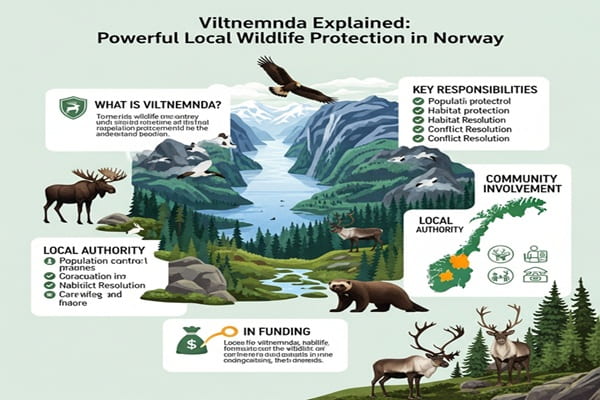
Viltnemnda translates to “wildlife committee” and is a legally mandated municipal board responsible for managing local wildlife. Unlike voluntary clubs or hunting associations, these committees operate under Norwegian law, particularly the Wildlife Act (1981) and the Nature Diversity Act (2009). These laws establish that wildlife is owned by the state, and municipalities must make decisions based on scientific evidence and precautionary principles.
Key Purposes of Viltnemnda:
-
Manage wildlife populations sustainably
-
Regulate hunting and assign local quotas
-
Coordinate emergency responses for injured or road-killed animals
-
Mediate conflicts between humans and wildlife (e.g., crop damage or livestock predation)
-
Advise on conservation and urban planning
-
Act as the local link to national agencies like the Norwegian Environment Agency
By combining legal authority with local knowledge, viltnemnda ensures national wildlife policy is applied effectively on the ground.
Structure and Governance
Each municipality designs its viltnemnda based on local needs, but common elements exist:
-
Membership: Typically 3–7 members plus deputies, appointed by the municipal council
-
Stakeholder Representation: Farmers, hunters, conservationists, and municipal environmental staff
-
Reporting Line: Usually reports to the municipality’s environmental or nature department
-
Decision Power: Can act as an advisory or legally binding decision-making body in matters like hunting quotas or emergency culling
Collaboration Network:
-
Police (for wildlife road accidents)
-
Landowners (property conflicts)
-
Local hunters’ associations (population data and hunting enforcement)
-
National agencies (policy consistency)
This structure ensures that viltnemnda combines local responsiveness with alignment to national conservation goals.
Responsibilities of Viltnemnda in Practice
Viltnemnda’s work spans several practical areas, all aimed at balancing human activity with wildlife management.
1. Wildlife Accidents and Injured Animals
When a driver hits a moose, deer, or other wild animal, Norwegian law requires reporting to the police (02800). The police then notify the viltnemnda or a designated wildlife response team.
Process:
-
Trained personnel, often with tracking dogs, locate the animal
-
Assess condition and provide humane euthanasia if needed
-
Remove the carcass safely
-
Document incidents in collision registers to inform future mitigation (signage, fencing, vegetation management)
This ensures both public safety and animal welfare.
2. Hunting Permits and Population Control
Hunting is a valued tradition, but without proper oversight, it can lead to overpopulation or depletion.
Viltnemnda’s role:
-
Review multi-year herd plans from landowners and hunting teams
-
Analyze biological data: harvest statistics, recruitment rates, vegetation pressure
-
Recommend annual hunting quotas and tag structures
-
Monitor compliance through reporting and biological verification (e.g., jaw samples for age analysis)
This evidence-based approach keeps hunting sustainable and minimizes ecological disruption.
3. Nuisance and Damage Control
Wildlife can damage crops, property, or infrastructure:
-
Moose browsing on young forests
-
Beavers flooding roads with dams
-
Geese grazing on farmland
How Viltnemnda Helps:
-
Investigates complaints or compensation claims
-
Recommends non-lethal interventions (fencing, scaring devices, beaver flow devices)
-
Can authorize limited damage culling when risks are high
-
Ensures interventions are location- and time-specific
4. Conservation Advice and Urban Planning
Viltnemnda advises municipalities on land-use planning to reduce human-wildlife conflict:
-
Suggests wildlife corridors
-
Recommends road signage or route adjustments
-
Helps avoid habitat fragmentation
This proactive involvement ensures conservation and development go hand in hand.
5. Public Education and Awareness
Committees educate the public on:
-
Reporting wildlife accidents
-
Coexisting safely with local wildlife
-
Understanding hunting quotas and population management
Public meetings and informational materials improve compliance and foster community support.
Challenges Faced by Viltnemnda
Despite their importance, viltnemnda face ongoing challenges:
-
Balancing Stakeholder Needs: Farmers, hunters, conservationists, and residents often have competing priorities.
-
Limited Resources: Many committees have small budgets, few staff, and rely on volunteers.
-
Climate Change and New Species: Shifting animal behavior and migration patterns require adaptable management.
-
Public Awareness: Some citizens are unaware of reporting duties, leading to unrecorded incidents.
-
Legal Overlaps: Some municipalities have replaced viltnemnda with other bodies, causing confusion over responsibility.
How Citizens Can Interact With Viltnemnda
-
Report Wildlife Accidents: Call 02800 if a wild animal is hit or found injured
-
Mark Location: Use visible markers and provide coordinates if possible
-
Submit Damage Claims: Provide photos and details to your municipality
-
Attend Meetings: Participate in discussions on hunting quotas and wildlife management
-
Volunteer: Assist with data collection or apply for committee membership
-
Raise Awareness: Educate neighbors about wildlife safety and reporting duties
Future Trends and Innovations
Viltnemnda is adapting to new challenges through technology and collaboration:
-
Drones and GPS collars: Track animal movements more accurately
-
Camera traps and citizen-science apps: Improve data collection
-
Digital reporting portals: Streamline citizen submissions
-
Regional cooperation: Manage species that cross municipal boundaries
-
Governance reforms: Diversify board representation, clarify rules, enhance public communication
Comparison With Other Countries
Norway’s viltnemnda system is unique. In the U.S., wildlife management is split among state agencies, counties, and private landowners, sometimes including tribal co-management. Norway centralizes these roles locally under municipal committees, blending legal authority, public participation, and ecological management.
Also Read : The Untold Story of Anne Steves: All About Rick Steves’ Ex-Wife
Quick Information Table
| Data Point | Detail |
|---|---|
| Legal Basis | Wildlife Act (1981), Nature Diversity Act (2009) |
| Role | Municipal wildlife board |
| Key Tasks | Wildlife accidents, hunting permits, population management, public advice |
| Core Partners | Police, landowners, hunters, national agencies |
| Most Active Months | September–November (hunting season, rutting season) |
| Common Interventions | Moose/deer collisions, beaver dams, crop damage |
| Public Reporting Line | Call police at 02800 |
Conclusion
Viltnemnda ensures that wildlife in Norway is managed responsibly, human-wildlife conflicts are minimized, and communities remain safe. By combining legal authority, local knowledge, and public engagement, these committees serve as a vital link between national policy and on-the-ground action.
Supporting viltnemnda through reporting incidents, participating in meetings, and raising awareness strengthens their ability to preserve biodiversity, protect public safety, and promote sustainable coexistence.
FAQs About Viltnemnda
1. What is viltnemnda in Norway?
A municipal wildlife committee managing hunting, accidents, and conservation under national law.
2. Who do I call if I hit a wild animal?
Call the police at 02800. They will alert viltnemnda or wildlife responders.
3. What happens to injured animals?
Trained personnel assess and, if necessary, humanely euthanize them. They also document the incident for safety planning.
4. Can viltnemnda prevent wildlife damage to farms?
Yes. They may recommend fences, non-lethal interventions, or authorize limited damage culling.
5. Are viltnemnda the same across Norway?
Each municipality has its own committee, but all follow national laws and similar responsibilities.